 ®
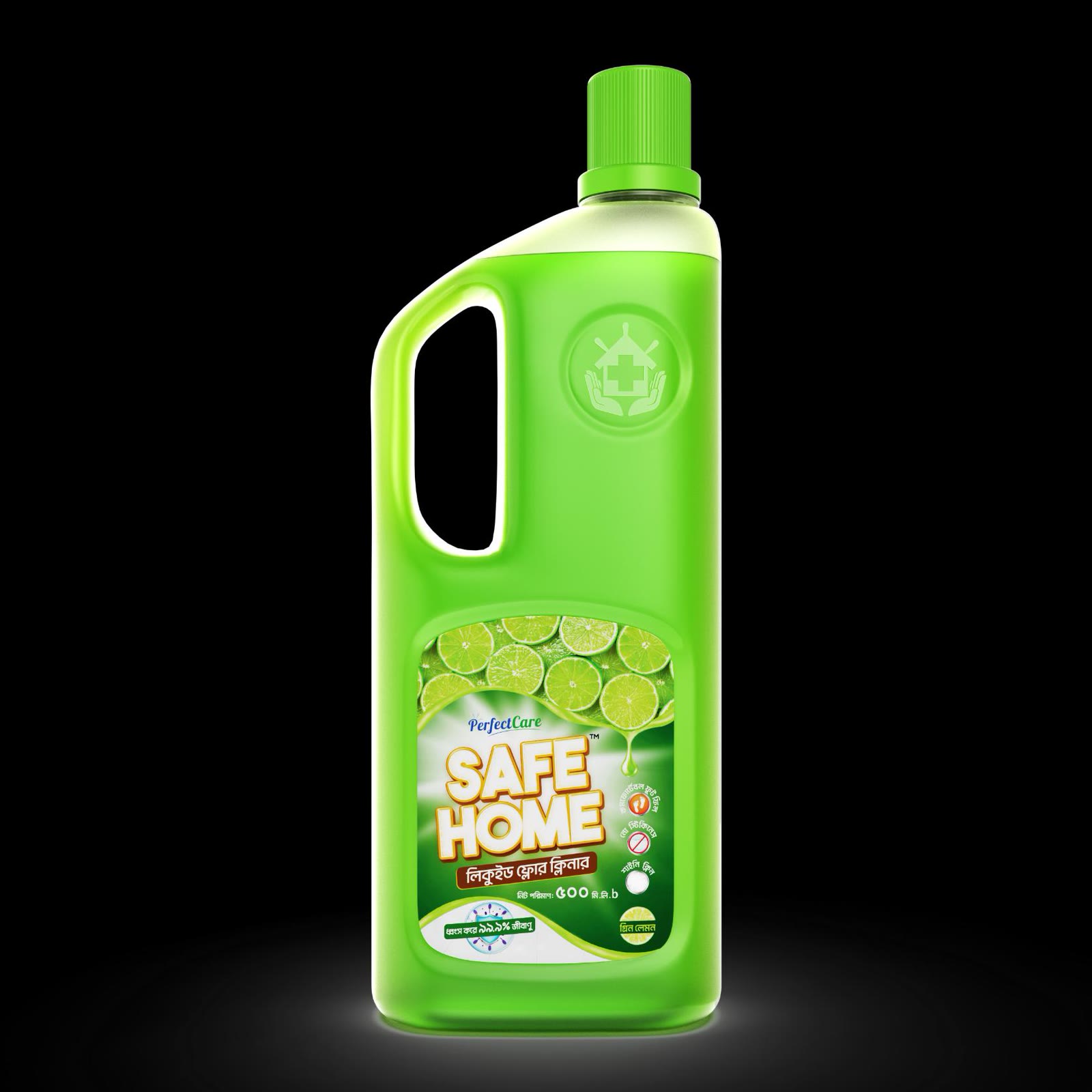
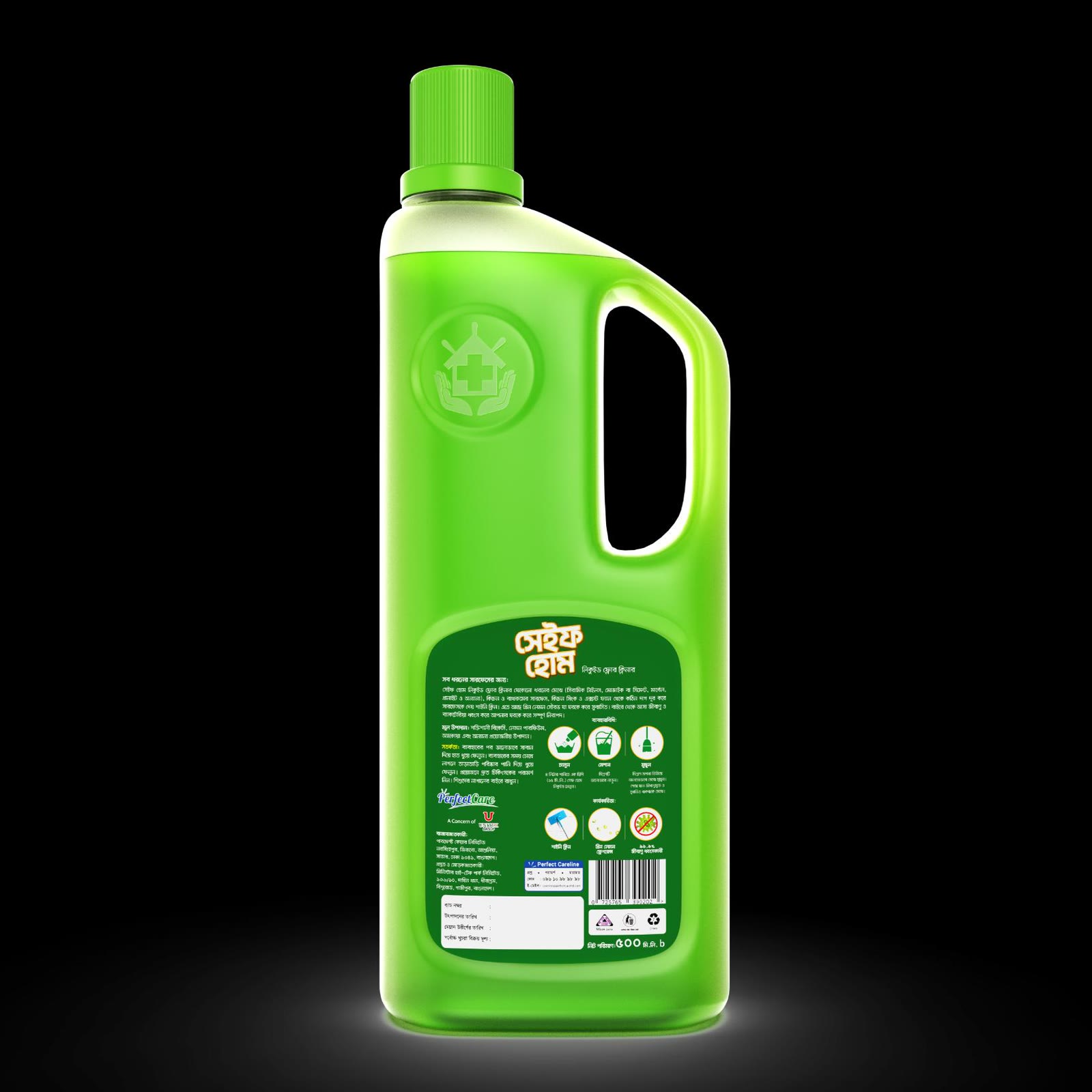
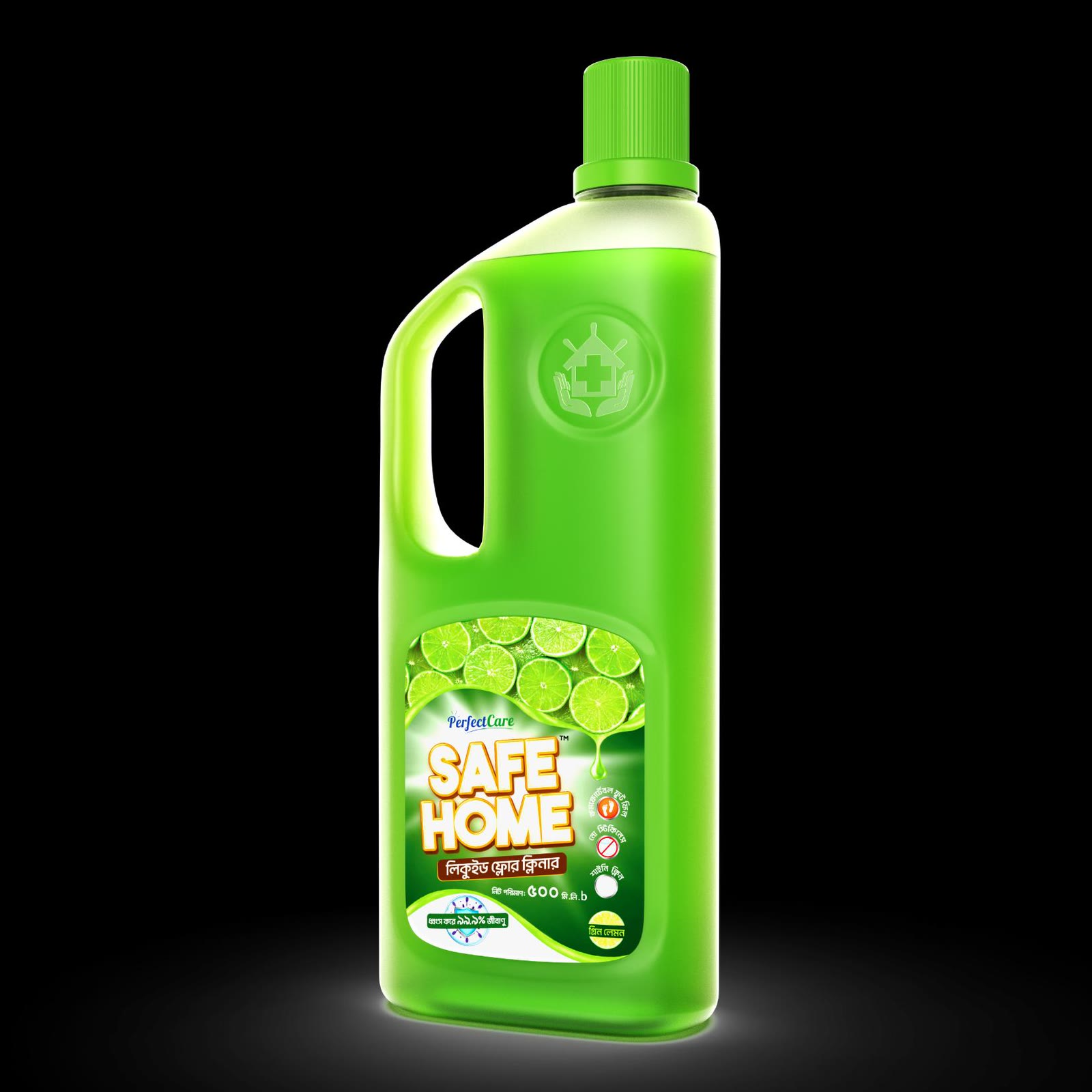
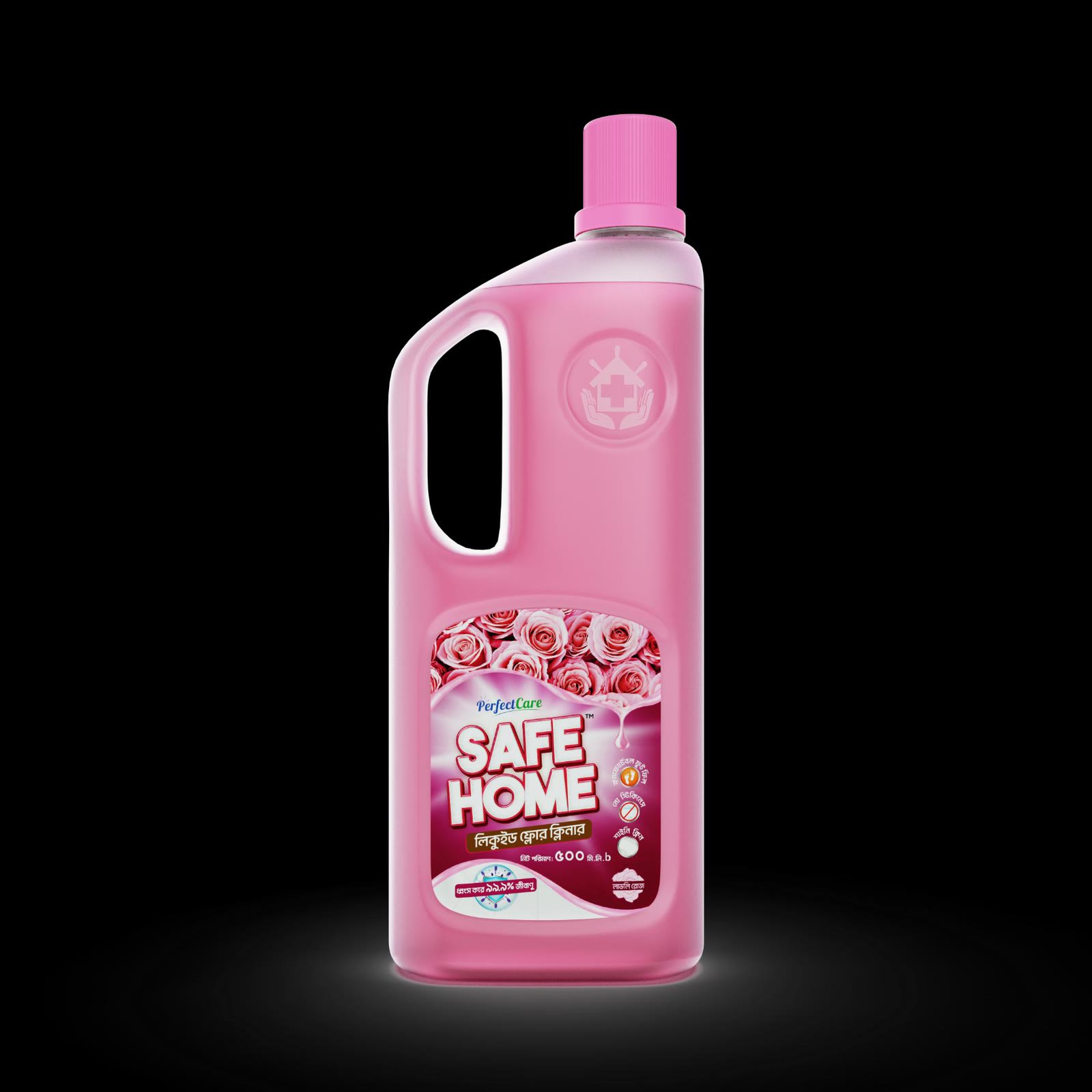
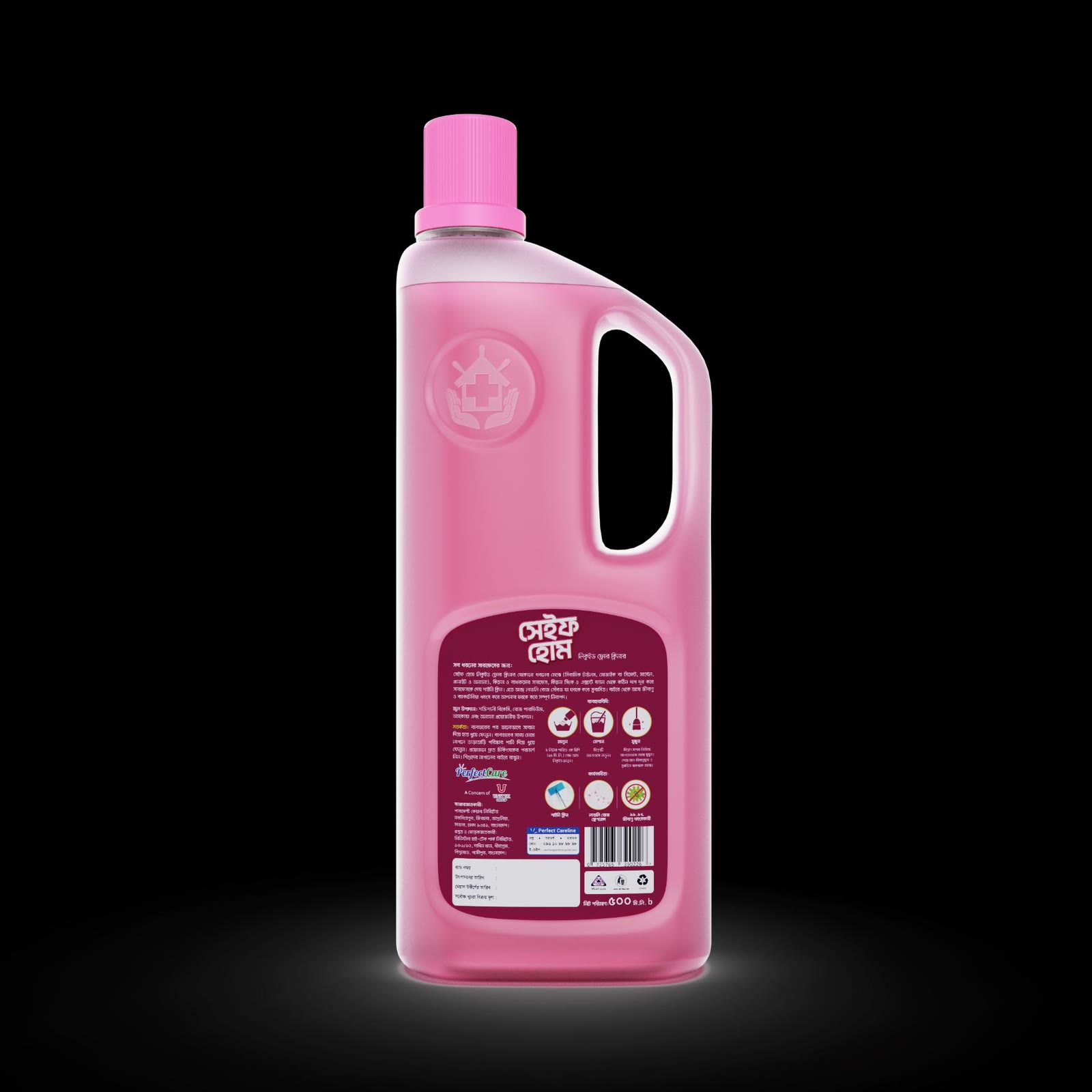
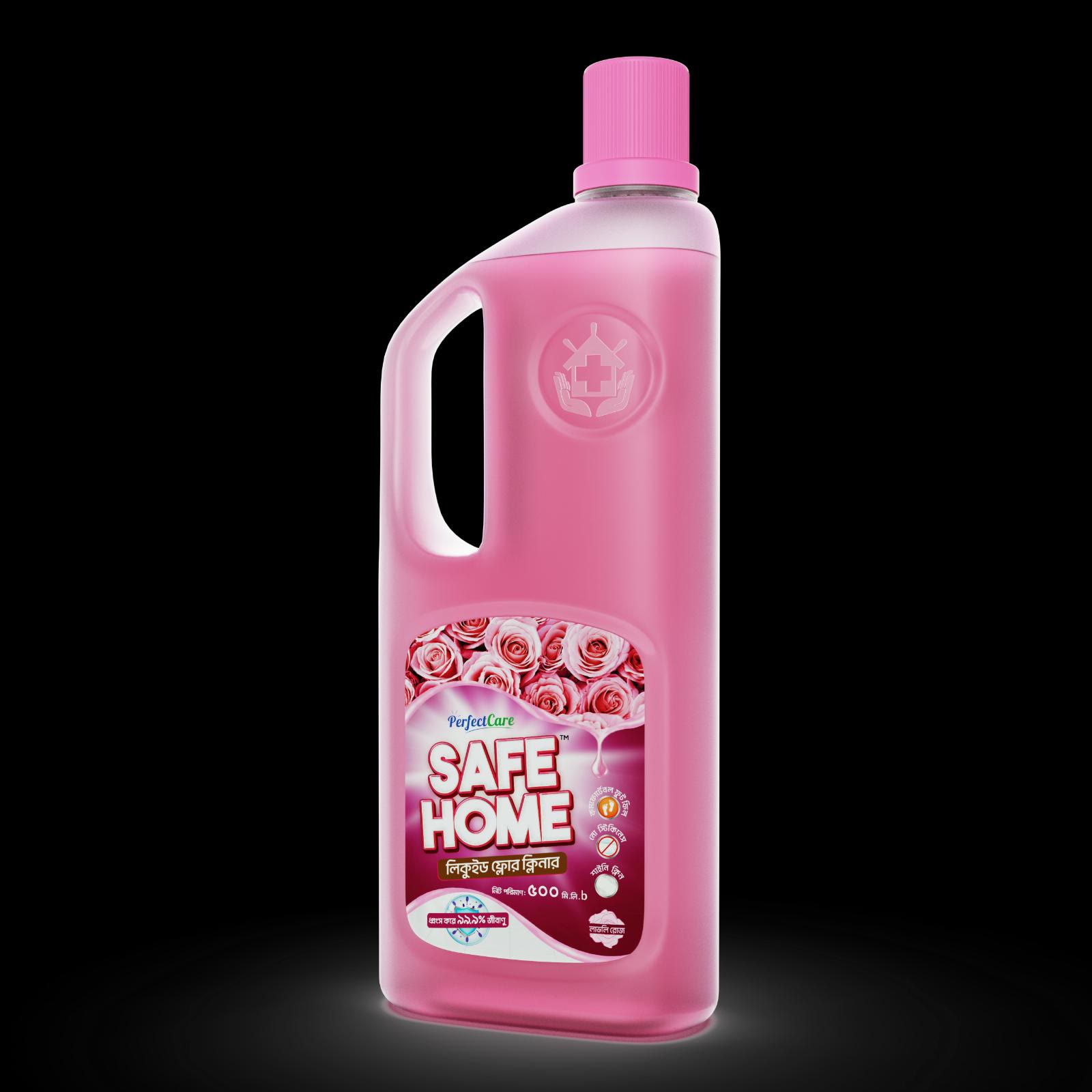
®Six e-commerce frames of a floor-cleaner range, in two variants, built from artwork and a dieline.
A household-cleaning range needed listing imagery across two variants and three angles. Photographing it would have meant printed labels, filled bottles and a studio day per variant. Building it in 3D meant one asset, then six frames out of the same file.
The brief
Produce marketplace-ready pack shots for a floor cleaner in two variants, showing the front face, the regulatory back panel and a three-quarter hero. The imagery had to read at listing-thumbnail size and survive being zoomed to full screen on a product page.
Why it was hard
Household packaging is unforgiving in 3D. The bottle is translucent HDPE, so the liquid inside changes how the whole form reads and the label prints onto a surface that is already scattering light. The label is in-mould rather than applied, so it has to wrap with the bottle rather than float above it, and the shrink-wrap over the cap catches light in a way that instantly looks fake if it is modelled as a clean solid.
Build to the dieline
The bottle was modelled to the pack dimensions rather than eyeballed from a photo, so the artwork lands where it does on the printed pack and the two variants share one geometry with only the label swapped.
Solve the material once
Translucent HDPE, the tinted liquid behind it, the in-mould label and the shrink-wrap were resolved as one material stack and then reused across the range — the reason variant two costs a fraction of variant one.
Light for the listing, not the portfolio
A soft key with controlled edge definition, framed square so the pack sits inside a marketplace tile with room to breathe, and checked at thumbnail size before anything was rendered at full resolution.
Technical notes
- Single geometry across both variants; only artwork and liquid tint change
- Label projected onto the bottle surface so it follows the draft and radius, not a decal plane
- Liquid modelled as its own volume with a fill line, visible through the wall
- Shrink-wrap given its own soft creases and specular break so the cap does not read as moulded plastic
- Square 1600 × 1600 frames — the aspect marketplaces crop to
What shipped
- Six final frames: front, back and three-quarter, in two variants
- Print- and web-resolution exports from the same scene
- Layered source files with the label artwork as a swappable input
- A lit scene set up to add further SKUs without re-lighting
The value of building the range rather than shooting it shows up on the next SKU: the scene, the lighting and the material stack are already solved, so an added variant is an artwork drop and a render, not another studio day.
Next case study →Spirits, where the glass does the selling