 ®
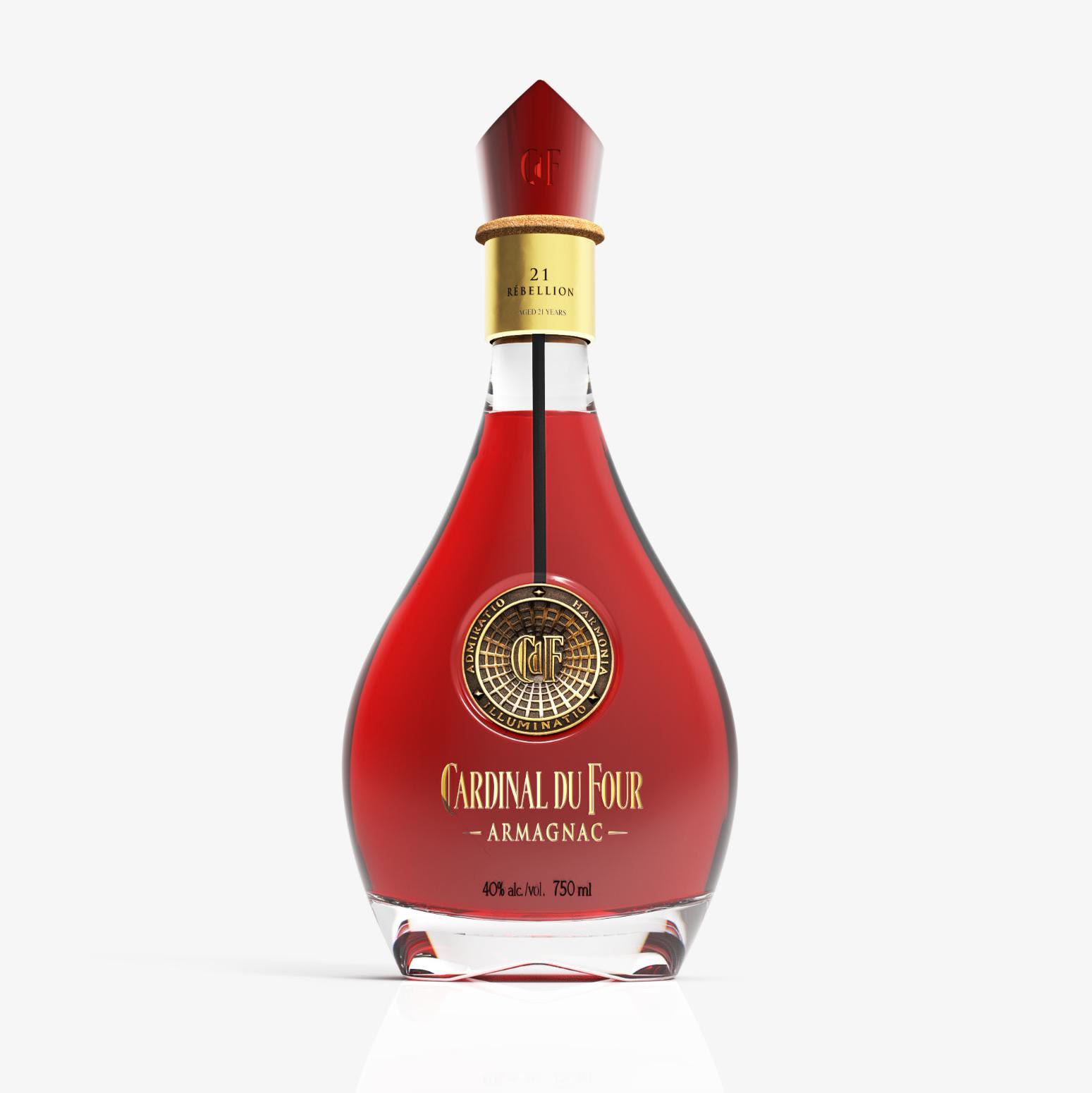
®A hero render for Cardinal du Four — dispersive glass, tinted liquid, foil and an embossed medallion.
Spirits photography lives or dies on the glass. This build set out to earn that quality in a render: refraction that bends the label behind the bottle, amber that deepens toward the base, and a foil seal that catches a single hard highlight.
The brief
A hero image for an Armagnac, good enough for campaign and listing use, with the bottle presented as the object it is — heavy glass, aged spirit, an embossed medallion at the shoulder.
Why it was hard
Everything difficult about product rendering meets in a spirits bottle. The glass is thick enough that dispersion is visible at the edges, the liquid tints anything seen through it, the label is read partly through curved glass from behind, and the foil is a mirror that will pick up whatever is wrong with the environment. Get any one of those approximate and the image reads as CG immediately.
Model the glass as glass
Wall thickness, punt and shoulder radius built as real volume rather than a shell, because refraction is what sells a bottle and refraction needs something to travel through.
Tune the liquid to the light
The spirit was given absorption that deepens with depth, so the colour goes amber at the shoulder and near-mahogany through the base — the falloff a photographer would light for.
Build the environment for the reflections
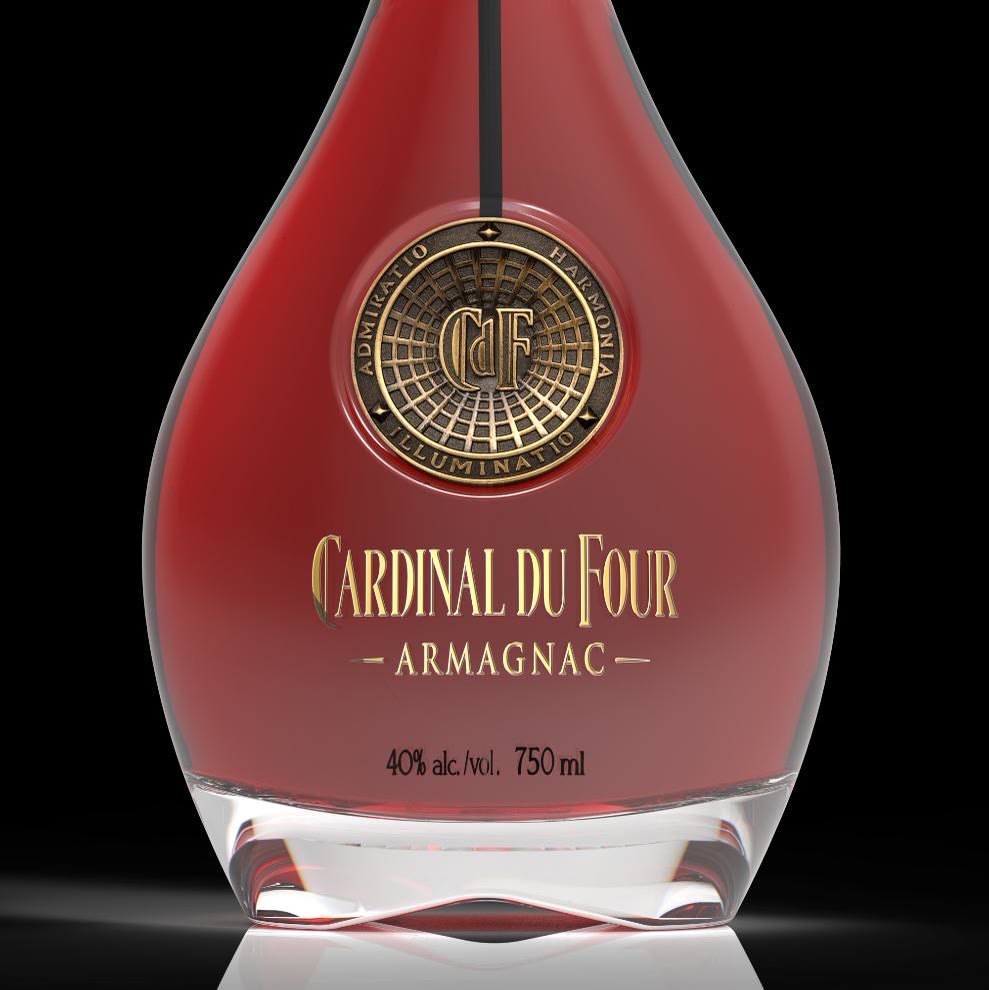
The foil seal and the embossed medallion are mirrors; the lighting rig was shaped around what they would reflect, with the highlight placed deliberately rather than discovered.
Technical notes
- Dispersive glass with real wall thickness — refraction through both walls, not a surface trick
- Depth-dependent absorption in the liquid for amber-to-mahogany falloff
- Label read through the bottle at the correct distortion, so the back of the label is part of the image
- Embossed medallion modelled with true relief; the highlight rolls over the emboss rather than sitting on it
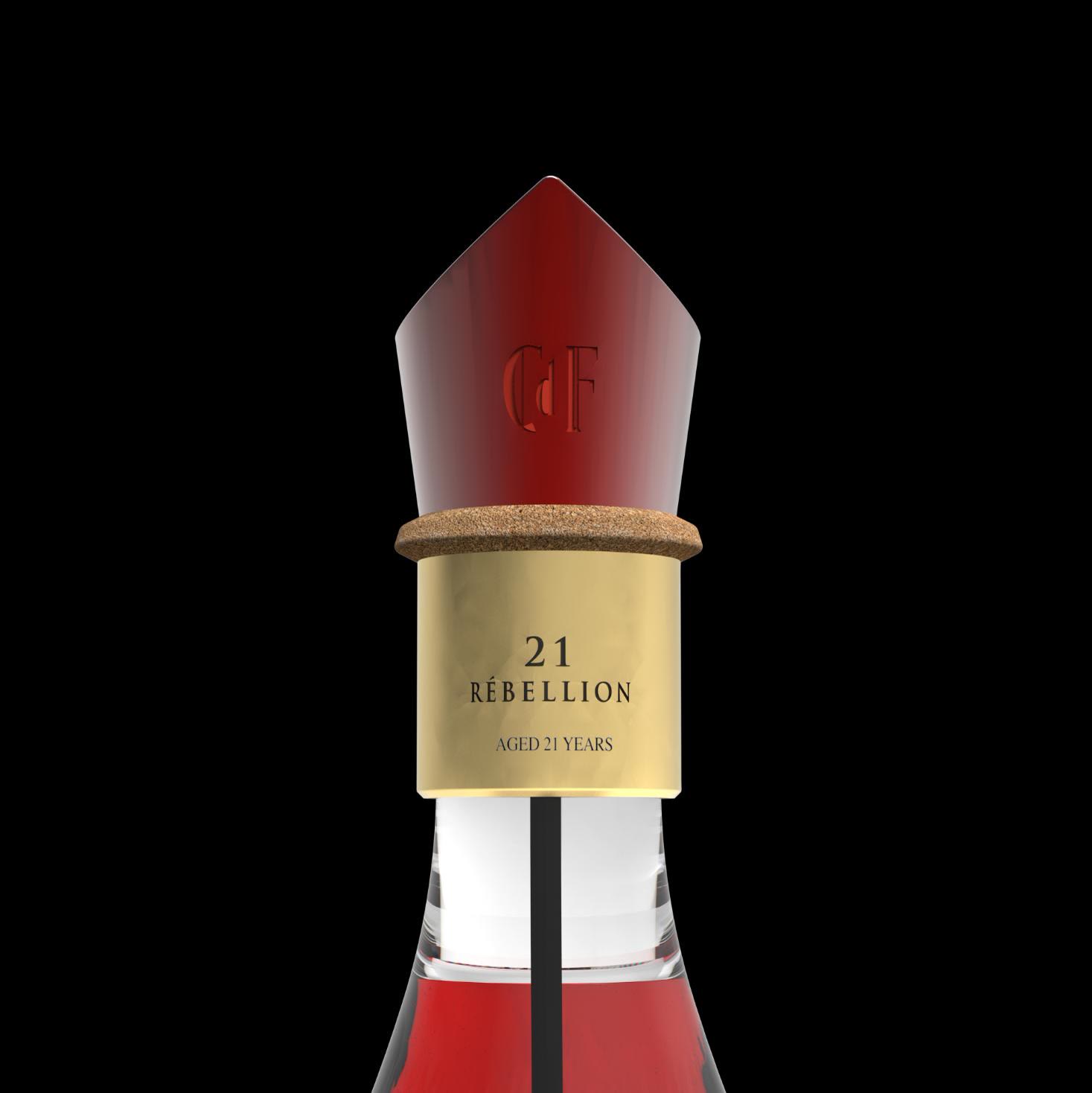
- Three square frames, from full bottle to close crop on the seal
What shipped
- Three final frames at campaign resolution
- Master scene with the lighting rig reusable across the range
- Close-crop detail frames for social and PDP use
- Source files with label artwork isolated for future vintages
The set was built as one scene rather than three set-ups, which is what makes a second bottle in the range cheap: new artwork, same glass, same light.
Next case study →A moonlit railway that had to sit inside the plate